AI, Energy and Climate
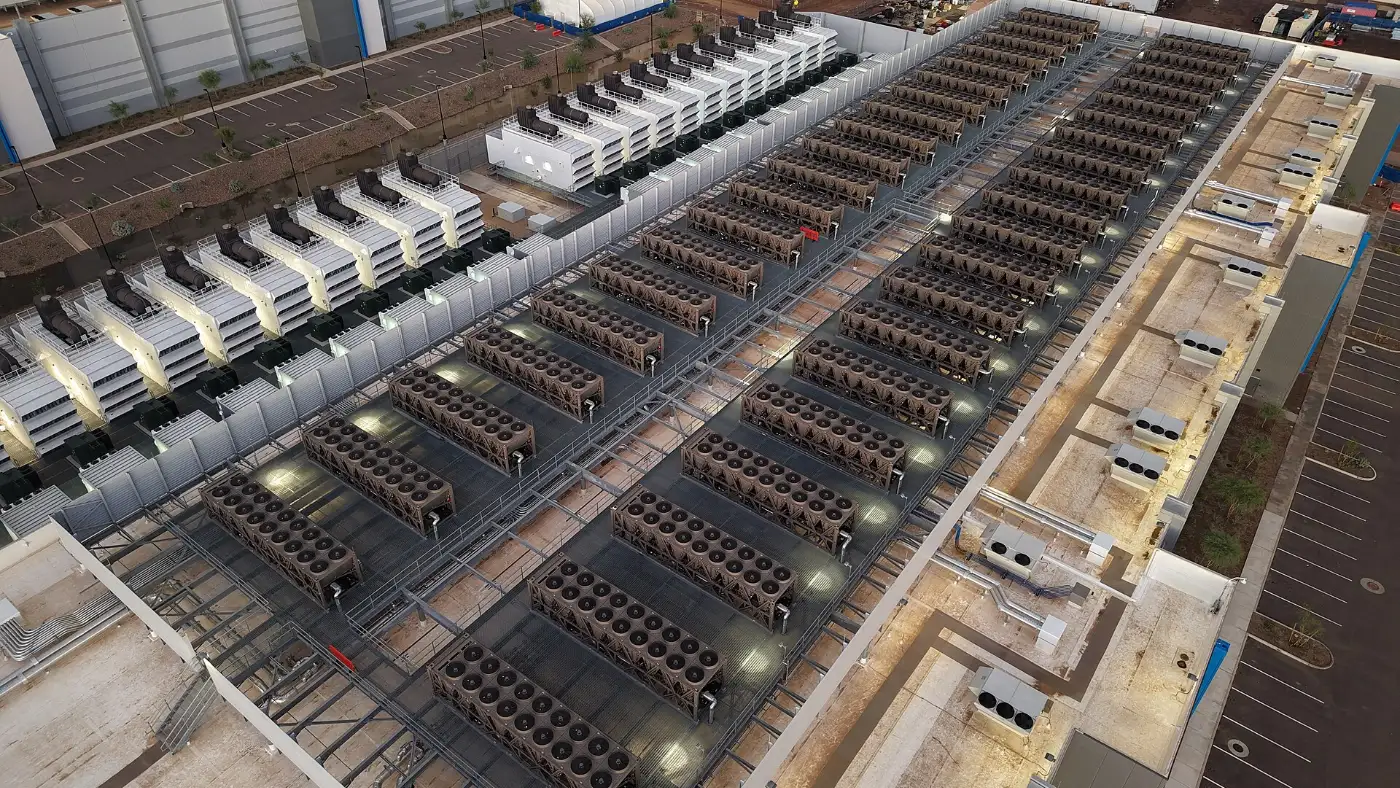
Laurenceo Intelligence tracks the energy cost of AI: data centre power demand, grid connections, nuclear and renewable deals, and the climate and resilience questions they raise.
- 18 developments
- 7 organisations
- 4 live forecasts
- Updated 21 November 2026
- Tracked since 28 September 2026
Grid access, not chips, now decides where AI capacity gets built
Power contracts, grid connection dates and local consent are setting the pace of AI infrastructure. The newest evidence is a Harvard estimate of US hyperscale power use 1 and Microsoft's exit from a UK site over a grid delay 7.
The Picture Now
Academic estimates put US hyperscale data centre electricity use at 68 to 99 TWh, with the upper figure approaching annual consumption in states such as Indiana, Michigan and Tennessee 1. Power is being locked up on long terms, with Google contracting 3,590MW from Constellation in PJM under 15- and 20-year agreements 14. PJM expects peak load to grow by up to 30GW through 2030, largely because of AI data centres 14.
Connection dates and local consent now decide capacity as much as capital does. Microsoft ended its anchor tenancy at Nscale's Loughton site after reports that sufficient power would not arrive until the early to mid 2030s 67. Opposition is also hardening, with AWS's chief executive warning that more than 100 data centre moratoriums are under consideration in the US 16, and a Virginia bill proposing a three-year pause on approvals 11.
What Changed Recently
ReNew announced a 1 GW renewable-powered hyperscale data centre in Anakapalli, Andhra Pradesh, within a package of about INR 80,000 crore 2. Google's US$15 billion Malaysia plan arrived as DC Byte data put Malaysia at more than half of the Southeast Asian capacity under construction, and the report notes pressure from communities and regulators 3. Alliant Energy expects to sign about 1 GW of additional data-centre contracts within six months and raised its 2027 to 2030 capital plan by 19% 4.
In October, FERC approved a PJM registry recording data centre load ramps and backup generation, but rejected a plan to curtail grid power to data centres at peak 12. Anthropic signed a lease at EverWind's Point Tupper campus in Nova Scotia, where the initial 95 MW facility is due online in late 2027 910. Amazon, AEP and X-energy agreed to explore 960 MW of small modular reactors in Indiana, but no final investment decision has been taken 8.
What It Means
Power access has become the binding constraint and the main point of differentiation. Hyperscalers that can sign multi-decade energy contracts will secure capacity ahead of smaller providers, and those terms will feed into cloud pricing and regional availability 1415. Microsoft kept its US$30 billion UK investment plan while exiting one site, which shows that a headline investment figure does not guarantee usable megawatts 5.
The cost of the grid build-out is shifting towards the companies building the compute. EverWind says it will fund electricity infrastructure so costs are not passed to ratepayers 10, and AWS has committed to cover utility upgrade costs so residents' bills do not rise 16. Amazon's role as both early funder and long-term offtaker of the Indiana reactor plan moves development risk away from the utility 8. Enterprises should treat regional power availability as a limit on capacity and price.
What to Watch
- Whether Alliant Energy signs the roughly 1 GW of additional data-centre load it expects within six months 4. The forecast probability of signed contracts by 30 April 2027 is 52 per cent.
- Whether Virginia's Senate Bill 843 advances, since a three-year pause from 1 July 2027 would reshape approval timing for the state's capacity 11.
- Whether Gorilla Technology completes its letter-of-intent acquisition by the end of November 2026, which would test its 36 MW utility-backed route 13.
Numbered links open the sourced story behind each point.
Lead Development
21 November 2026Harvard study estimates US hyperscale data centres used 68 to 99 TWh of electricity
Researchers estimated energy use and carbon emissions for hyperscale data centres. Depending on how hard the facilities were running, they together used between 68 and 99 terawatt-hours of electricity, with the upper estimate approaching annual use in states such as Indiana, Michigan and Tennessee. Emissions were attributed to each facility using EPA data on the power plant mix in its regional grid.
Why it matters. Facility-level estimates that compare data centre demand with whole-state consumption give utilities, regulators and local opponents a concrete reference for grid planning and permitting disputes. Hyperscalers and AI infrastructure developers are exposed to tougher scrutiny of siting, power sourcing and emissions claims. Corporate sustainability teams should expect independent academic figures to be set against their own disclosures.
This Week
- 16 November 2026ReNew announces 1 GW green hyperscale data centre in Andhra Pradesh within INR 80,000 crore planPairing gigawatt-scale compute with dedicated renewable supply shows that power access is becoming the main constraint and differentiator for AI infrastructure outside the US. Hyperscalers, colocation operators and...
Earlier Coverage
- 8 November 2026Google launches $15bn Malaysia investment for 2027-2028 as the country's data centre boom draws pushbackHyperscale AI capacity is increasingly decided by who can secure power, water and local consent, not only by who can fund construction. Operators, utilities and investors in Southeast Asian data-centre markets should...
- 1 November 2026Alliant Energy targets 1 GW of further data-centre contracts within six months, raises capex plan 19%Data centre demand is converting into multi-year utility commitments, which supports grid and infrastructure investors but ties delivery to utility build schedules. Hyperscalers and developers should plan around...
- 24 October 2026Microsoft exits lease at Nscale site over grid delay but keeps US$30bn UK investment planA headline investment figure does not guarantee capacity at any given location; power connection timing can decide whether a site is usable. Buyers of AI compute should test the energisation schedule of a provider's...
- 21 October 2026Microsoft exits Nscale's Loughton AI data centre as UK grid power slips into the 2030sA hyperscaler walking away from a named anchor-tenant deal shows that grid connection dates, not capital, now decide where AI capacity is built. Developers and investors should treat confirmed energisation dates as a...
- 20 October 2026Microsoft exits Nscale's Loughton AI data centre after grid connection slips to the 2030sThe anchor tenant left because the site has no power date it can rely on. Chip supply was not the problem. Compute buyers should treat a confirmed grid connection date as a core contract term, with exit rights tied to...
- 20 October 2026Amazon, AEP and X-energy agree to explore 960MW small modular reactor plant in IndianaAmazon is acting as both early funder and committed offtaker. That moves part of the development risk from the utility and its ratepayers to the hyperscaler. The structure could become a template for financing large...
- 18 October 2026Anthropic signs first Canadian data centre lease with EverWind in Nova ScotiaLeasing directly from an operator that also controls generation moves an AI developer closer to the power and grid risks that hyperscalers usually absorb, in exchange for more control over capacity and timing. For...
- 17 October 2026Anthropic signs first Canadian data-centre lease at EverWind's C$10bn Nova Scotia projectPairing dedicated generation with a commitment to keep grid costs off ratepayers addresses the political objection most likely to stall large AI campuses. Developers and utilities elsewhere are likely to be asked for...
- 16 October 2026Virginia bill proposes three-year statewide moratorium on data centre approvals from July 2027A proposal is not a law, but it comes from the jurisdiction at the centre of US hyperscale capacity, and it puts grid cost and capacity at the heart of the political debate. Developers and tenants planning Virginia...
- 14 October 2026FERC approves PJM data centre registry but rejects plan to curtail grid power to data centresData centre operators in PJM will now disclose detailed load and backup data to the grid operator, which formalises their status as a distinct class of grid customer. Curtailment risk has been deferred, not removed...
- 11 October 2026Gorilla Technology signs non-binding letter of intent for its first US data centre and targets more than 100 MW of US capacityThe deal is valued mainly for its path to utility power rather than its current size. This suggests that securing grid capacity, not building facilities, is what determines entry into AI infrastructure. Because the...
- 8 October 2026Google contracts 3,590MW from Constellation in PJM, including 890MW of new nuclear outputContracted firm power is becoming a competitive asset in its own right, and the largest buyers are locking it up on 15- to 20-year terms. Enterprises planning AI and cloud capacity should treat regional power...
- 7 October 2026Google contracts 3.6GW from Constellation in PJM, funding $4.3bn of nuclear upratesSecuring power is now a precondition for AI capacity, not a cost line to be optimised later. Hyperscalers that can sign multi-decade energy contracts will gain capacity ahead of smaller cloud and colocation providers....
- 4 October 2026AWS drops nondisclosure agreements with government agencies on data centre projectsHyperscale capacity now depends on public consent as well as on power, land and capital. Transparency and ratepayer protections are becoming part of the cost of securing sites. Enterprises planning AI workloads should...
- 29 September 2026New estimate puts US data centre and AI infrastructure investment at $10.3 trillion from 2025 to 2032Investment on this scale concentrates exposure among lenders, insurers, utilities and equipment suppliers, whose returns depend on sustained AI demand. A nominal financial commitment behind a multibillion-dollar...
- 28 September 2026Oracle sends force majeure notice over power delays at Stargate Project Jupiter campus in New MexicoThe notice places a permitting delay on a gas pipeline at the centre of a flagship AI capacity project, and it shows how that risk is being allocated between tenant and capital provider. Lenders and investors in AI...
Forecasts
Open questions on the Laurenceo forecast board, with the current probability.
- Will FERC issue a final rule on large-load interconnection to the transmission grid in docket RM26-4 by 2027-06-30? (10% by 30 June 2027)
- Will the US Energy Information Administration project US electricity consumption of 4,400 billion kWh or more for 2027 in a Short-Term Energy Outlook published by 2027-03-31? (22% by 31 March 2027)
- Will Alliant Energy announce signed contracts for at least 1 GW of additional data-centre load by 2027-04-30? (52% by 30 April 2027)
- Will the Michigan Public Service Commission vacate or materially modify its approval of DTE Electric's service application for the 1 GW Google data centre by 2027-03-31? (18% by 31 March 2027)
Organisations
Every Desk
 Frontier AI24 stories · 30 daysLatest: Gottheimer and Moran introduce bill requiring reporting on automated AI research and development
 Defense40 stories · 30 daysLatest: Pentagon makes Air Force ACME the department-wide AI-aided classification system
 Geopolitics15 stories · 30 daysLatest: Commerce adds Megaspeed and six other entities to Entity List over AI chip diversion risk
 Financial Markets76 stories · 30 daysLatest: S&P puts Nvidia's AA rating on CreditWatch negative over governance after Huang exit and return
- Infrastructure56 stories · 30 daysLatest: FCC conditionally approves SpaceX plan for up to 1 million orbital AI data centre satellites
 Regulation36 stories · 30 daysLatest: UK FCA warns tech firms that AI agents offering financial services could face regulatory action
Next deskFrontier AI Models →Latest: Gottheimer and Moran introduce bill requiring reporting on automated AI research and development
More Coverage
- Cybersecurity and AI Threats
- AI in Financial Services
- AI in Insurance and Reinsurance
- Bermuda AI News
- AI Safety and Incidents
- Data Centres and Compute
- Semiconductors and Chips
- AI Investment and Markets
- Privacy and Data Protection
- Enterprise AI and Agents
- AI, Work and Skills
- Government and National Security
- AI in Healthcare and Life Sciences
Laurenceo Intelligence is the daily AI intelligence briefing published in Bermuda by Laurenceo and edited by Jorai Laurenceo. Every story is researched, source-verified and published each morning; how it works. General information only, not legal, regulatory or financial advice.